



Kamran Reza Chowdhury, Dhaka
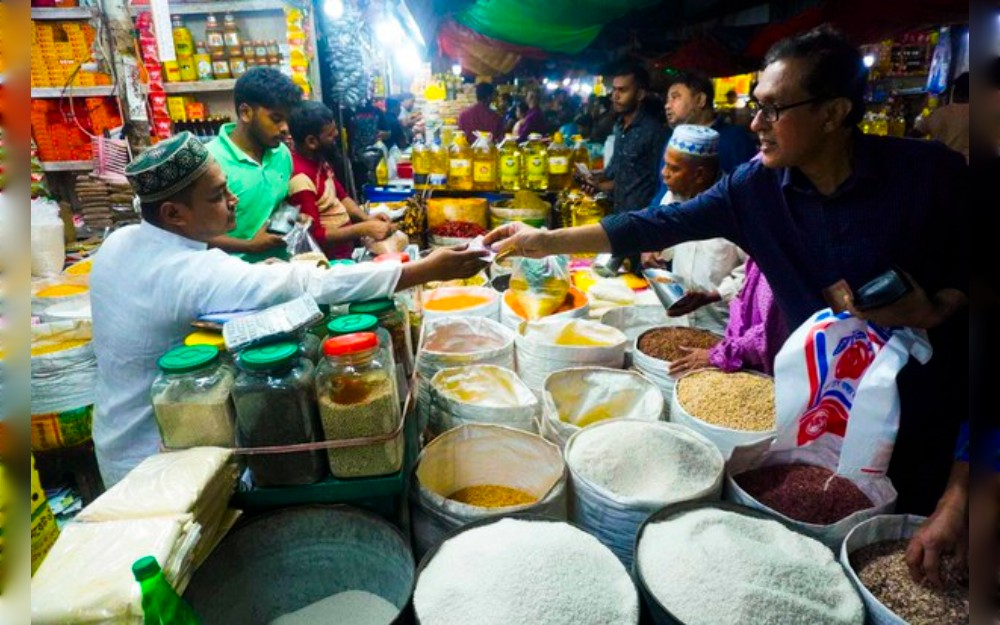
Prices for several essential food items continue to rise in Bangladesh ahead of Ramadan, with consumers mostly blaming the government for not keeping costs in check in time for the Islamic fasting month that begins next week.
Staples such as chickpeas, eggplant, sugar, lentils, chicken and oil rose by 5-10% in price this week from the previous seven days.
However, the highest increases – 17-55% – have been for items such as dates, raisins and fruit, which are eaten more during the month as people begin and end their sunrise-to-sunset fast, with consumers and traders blaming unscrupulous businesspersons for the rise.
Md. Alam, a grocery store owner in Pallabi, a Dhaka neighborhood, said there was a definite jump in prices this week in food items considered as essential to the Bangladeshi diet.
“Chickpeas, which many eat for breakfast, were being sold on Friday at 110 taka (U.S. $1) per kg (2.2 pounds), up from 100, around 10 days ago,” he said, referring to the 10% increase.
Md. Rafiq, a poultry vendor in the Mirpur-12 residential area of Dhaka, said sales of chicken had increased ahead of Ramadan, and its cost has gone up 9% since last week.
He said 1 kg (2.2 pounds) of chicken now costs 360 taka (U.S. $3.30) compared with 330 last week.
“The price goes up [general] owing to Ramadan. In the first 10 days of Ramadan, sales will increase then it will come down over the next 10 days,” he told BenarNews.
“Then sales will increase again after the 20th Ramadan day and prices will rise further towards the end of Ramadan, for Eid-ul-Fitr.”
The regular Ramadan price increases were different this year, though, said Shubol Saha, a trader in the Mirpur-11½ neighborhood of Dhaka.
“The prices of chickpea, edible oil and sugar this year have not increased that much because the media kept writing about inflation in staple food items,” he told BenarNews.
“But the prices of dates and other fruits have skyrocketed.”
For example, 1 kilo of moderate quality dates were being sold on Friday for 1,000 taka – a 25% increase from last week – Saha said. Prices of good quality dates had shot up a whopping 50% and imported oranges were up 18%. And raisin prices have increased 33%.
“Many people eat more fruit for breakfast,” Saha said, referring to the Ramadan period, when people usually eat more of these items.
‘Government monitoring is necessary’
Consumer associations, small traders, and a former chamber of commerce official primarily blamed the government and its inaction – deliberate or otherwise – in punishing unscrupulous businesspersons and so-called syndicates comprising big corporation owners who fund politicians.
Mir Nasir Hossain, a former president of Federation of Bangladesh Chamber of Commerce and Industry, said exploitative businessmen were taking advantage of Ramadan and the government was looking the other way.
“High [volume of] sales in Bangladesh are concentrated during the Ramadan and Eid festivals. The businessmen take the opportunity to profit,” he told BenarNews.
“To stop this, strong government monitoring is necessary.”
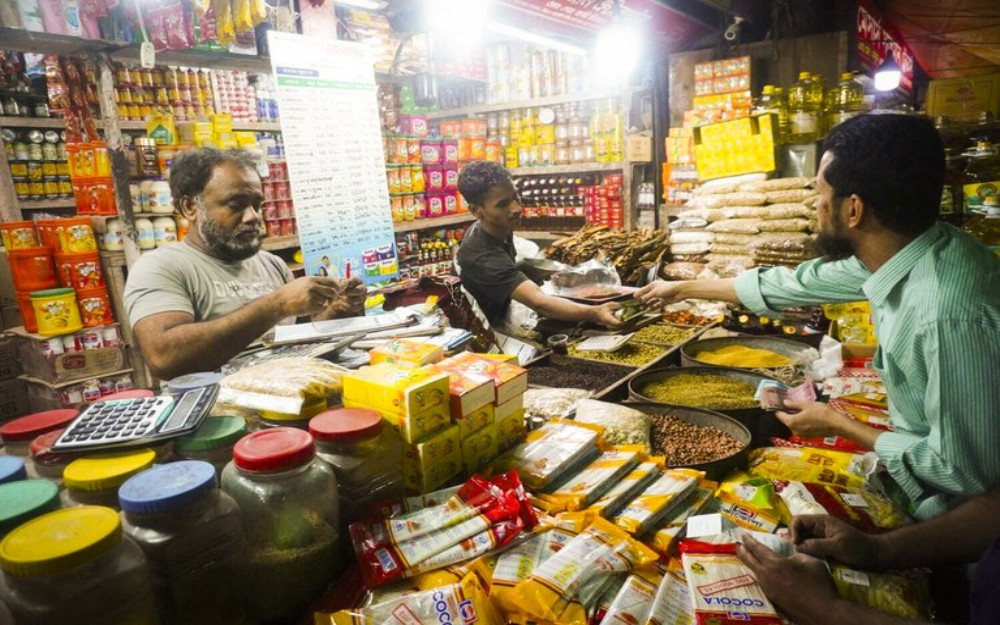
Humayun Kabir Bhuiyan, general secretary of the Consumer Association of Bangladesh said there was a symbiotic relationship between politicians and syndicates.
“The government is hostage to them. This syndicate even boasts that they can dislodge the government,” Bhuiyan said.
In other words, if the syndicates stopped supplying essential commodities, there likely would be huge protests against the government.
In exchange, the politicians turn a blind eye to the manipulation of prices by syndicates who work with agents they have planted in all sectors.
“Additionally, the government agencies’ monitoring on hoarding is almost absent, making the market a monopoly show for the corrupt business syndicates,” Bhuiyan said.
Efforts by BenarNews to seek comment from several officials at the Ministry of Commerce on Friday were unsuccessful.
“They [the businessmen] justify the price hike saying the taka has depreciated against the U.S. dollar. But has there been any hike in dollar rates due to Ramadan?”
By that, he meant Bangladesh’s currency is relatively more stable now, so there is no reason to hike prices using that as an excuse.
Bhuiyan also said the government set up an institution called Competition Commission that was tasked with ensuring there was adequate competitiveness among businesess.
“But this commission has failed to make any tangible impact,” he said.
Importers and dealers were also to blame for the increase in essential foods’ prices, said Nurunnabi Islam Rubel, a trader in Kawran Bazar wholesale market in Dhaka.
“We buy products from the dealers daily. With marginal profit, we sell the items. When they reduce the price, we reduce and when they increase, we also increase,” he said.
“Unless the importers and dealers reduce the prices, we can’t do anything.”
Bhuiyan, of the Consumer Association, said that in other Muslim-majority countries’ such as the United Arab Emirates and Saudi Arabia, the prices of essential foods were reduced because Islam calls for restraint during Ramadan.
“Here in Bangladesh, we see a reverse situation,” he said.
“Prices of all essentials such as oil, chicken, lentils and other items have gone up.”
Copyright ©2015-2024, BenarNews. Used with the permission of BenarNews.