



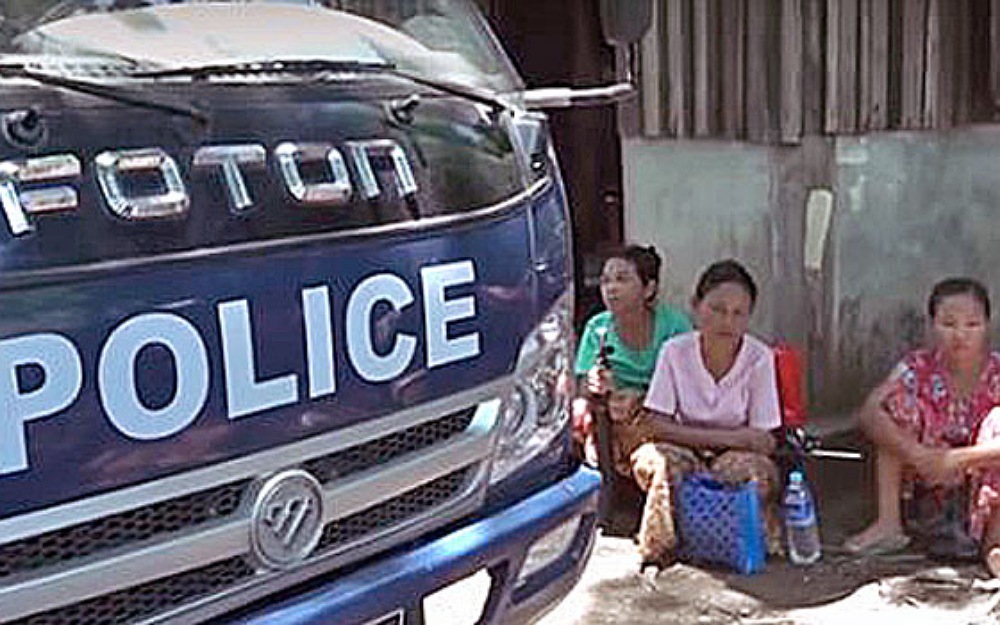
A family in western Myanmar’s Rakhine state was ordered to collect the battered body of a 37-year-old man, days after he was detained by the army for suspected ties to the rebel Arakan Army — a victim of what rights workers say is a rising tide of arrests that has swept up hundreds of mostly young men.
Authorities say Soe Myint Tun, detained on July 11 by the army with five other ethnic Rakhine men suspected of links to AA, hanged himself while under interrogation. His family says he was an ordinary villager and that his body shows clear signs of torture. What is not in dispute is that he died in official custody.
Civilian detentions, a controversial Myanmar army practice during decades of wars with ethnic armies, are on the rise in the southern part of Rakhine, which had been relatively untouched by the armed conflict that has ravaged the northern section of the state for 19 months, those familiar with the situation told RFA.
A legal aid group based in Sittwe, the capital of Rakhine state, counts 95 cases in which soldiers have arrested 308 individuals in Rakhine state for allegedly having connections to or conspiring with the AA. Most are young men in rural areas, often picked up on little evidence.
“Lately, there are more cases of arresting civilians merely on suspicions,” Myo Myat Hein, program director at the Thazin Legal Aid Group, told RFA’s Myanmar Service, adding that all the cases are all being tried in courts.
“These cases have increased in Ann and Kyaukphyu areas,” said the attorney, referring to two townships in the southern part of the coastal state. Myo Myat Hein reckons 500 or more Rakhine civilians are on the run to avoid arrest by the army.
Myanmar military spokesman Brigadier General Zaw Min Tun told RFA on Wednesday that he did not have a figure for the total number of civilians who have been arrested and changed for allegedly having links to the AA.
The AA seeks autonomy for ethnic Rakhines in the state, a riverine land of 3.2 million people on the Bay of Bengal that is one of Myanmar’s poorest states. The AA, formed in 2009 with an estimated 8,000 fighters last year, was declared an illegal association and terrorist organization by the government in March.
Soe Myint Tun’s detention was among a series of recent arrests of Rakhine civilians in July, revealed to RFA in telephone interviews with relatives of the detained men.
July 11, soldiers from Myanmar Army Infantry Battalion Nos. 34 and 35 military troops raided Ah Lel Chaung village in Ramree township and arrested six villagers, said community administrator Maung Maung Shwe.
“They inspected all the houses in the village and took away the people they wanted for interrogation,” he said, adding that the soldiers had a list of the villagers’ names and national ID card numbers.
They deemed seven villagers suspicious, but only took six of them away and let one teenager go free, Maung Maung Shwe said. He described the men as ordinary farmers, fishermen, and road workers, with no known connections to the AA.
‘Beaten to death’
On Tuesday, three days after the six men were taken away, local police informed the relatives of Soe Myint Tun to collect his body, claiming that he hung himself while in custody.
“We were informed by the Ma-Ei police station through the Ramree township police station that Soe Myint Tun had died,” family member Kyaw Hlaing told RFA. “They asked the family members of all six detainees to come to the police station.”
“When we saw his body, it looked like he had been tied and beaten to death,” Kyaw Hlaing said. “His face and head were full of bruises and open wounds. It is impossible that he died from hanging. He must have died from torture and beatings.”
Other relatives and villagers who saw the body confirmed signs of beating.
Zaw Win, commander of the Ramree township police force told RFA that Soe Myint Tun did not die in that police station, but during an interrogation in next-door Taungup township.
Brigadier General Zaw Min Tun said an autopsy would determine the truth about how Soe Myint Tun died.
The fate of other five men taken from Ah Lel Chaung village on July 11 remains unclear.
Rakhine patriotic songs
In another incident tracked by RFA on July 11, also in southern Rakhine state, Phyo Win Aung, 20, and Tun Myint Soe, 32, from were arrested after soldiers entered Saing Chon village in Kyaukphyu township and discovered information on their mobile phones that allegedly linked them to the AA, their relatives said.
Pho Win Aung’s mother, Ye Ye Win, said her son was arrested for having records of phone calls to friends who are AA members. He was naïve to answer the calls from his friends, she said, but was not involved with the ethnic armed group.
“As far as I know, he doesn’t have any connections to any organizations,” she told RFA.
“They said he had contacted AA members. He is just a young adult and has no consideration for the consequences of answering such phone calls. My son didn’t do anything wrong,” she said.
Similarly, soldiers arrested two villagers from Kyaukphyu’s Zin Chaung village on July 7, and their family members have not had any contact with them.
On the same day, Myanmar Army troops arrested two villagers from Lay Taung Chaung in Ramree township, saying they had violated the country’s Counter-Terrorism Law for having Rakhine patriotic songs on their phones, their relatives said.
Myanmar military spokesman Zaw Min Tun rejected the suggestion that soldiers had detained the villagers for having songs on their cell phones.
“Maybe they found indisputable evidence on their phones, such as evidence of having connections with the enemy or sending the military’s troops information to AA troops,” he said.
“Once we found such evidence, we proceeded to interrogate and charge the individuals lawfully,” he added. “But it is not true that the military arrested the civilians just for having Rakhine patriotic songs on the phone. These accusations are pure propaganda.”
The military also announced it had arrested seven villagers from Kyaukphyu’s Kat Thabyay village on June 6 on suspicion of having connections to the AA and charged them under the Counter-Terrorism Law on July 4.
Arbitrary arrests ‘not good’
Zaw Min Tun defended the military’s extended detentions, saying they were necessary because AA troops sometimes disguise themselves as civilians to more easily attack government troops or to detonate landmines.
“It is very challenging for us to distinguish between them [civilians and AA soldiers],” he said. “AA troops in civilian clothes attack us and flee to take shelter in the village.”
“We might have arrested some people for suspicious activities, but we alone cannot charge them. It is up to the corresponding police station and court,” he added.
Khin Maung Latt, a Rakhine lawmaker in Myanmar’s upper house of parliament who represents Rathedaung in the northern part of the state, said soldiers should allow the family members of those arrested to have access to them.
“Making arbitrary arrests is not good,” he told RFA. “They should keep these detainees in conditions mandated by the law. Their families should be informed. They are not guilty until the court proves them guilty. Their cases should be tried at court.”
The military arrests in Rakhine state follow a familiar pattern of arbitrary arrests, detention of ethnic civilians caught up over the years in other Myanmar war zones, including in Kachin and northern Shan states.
Rights groups have called for international action to halt the ill treatment of civilians, which at times includes forced labor and extortion, in various conflict zones to ensure that those responsible for serious crimes are held accountable.
A 2019 report by Amnesty International found that the Myanmar military in northern Shan state subjected civilians to arbitrary detention, often arresting men and boys on the basis of their ethnic identity and a perceived link with one of the many armed groups active in the state.
“As is the case in other conflict-affected areas of Myanmar, arrests and detention were often accompanied by torture and other ill-treatment,” said the report, based on interviews with nearly 90 people, including witnesses to rights violations, with incidents documented by satellite imagery and photographs.
“Soldiers beat, kicked, and punched detainees in order to obtain information about ethnic armed groups, or else to force detainees to ‘confess’ to being members of such groups,” it said.
Appropriate punishment
Zaw Zaw Tun, secretary of the Rakhine Ethnics Congress said 20 percent of the total 194 civilian deaths that his NGO has tallied during the 19-month conflict occurred while individuals were in military detention.
“Their bodies were found with injuries, so these deaths were related to the military’s interrogations,” he told RFA.
Aung Myo Min, executive director of the human rights education group Equality Myanmar, said certain mechanisms are needed to probe deaths that occur in military custody.
“We need certain mechanisms in place to investigate these deaths when they occur,” he said. “When it comes to the investigations, the investigators should be able to work independently, and all parties should cooperate with them.”
The major shortcoming in the current process is a lack of appropriate punishment for those who are found to have violated the rights of detainees or abused them once the investigations have been completed, Aung Myo Min said.
“Because of this weakness, the violators become more aggressive and unafraid of the consequences when arresting and torturing [other] detainees,” he said.
Reported by RFA’s Myanmar Service. Translated by Ye Kaung Myint Maung. Written in English by Roseanne Gerin.
Copyright © 1998-2020, RFA. Used with the permission of Radio Free Asia, 2025 M St. NW, Suite 300, Washington DC 20036. https://www.rfa.org

Computer Incident Handling
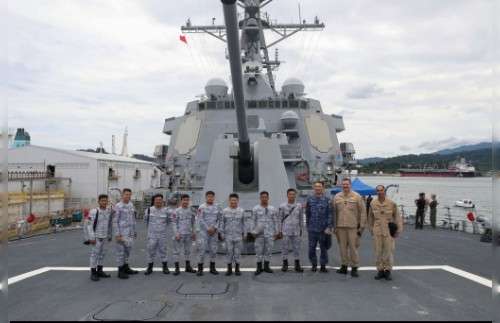
US to Set Up Philippines Fuel Depot in Support of its South China Sea Operations

Press Briefing on Humanitarian Situation in Haiti

Texas Woman Sentenced to Six Years in Prison by jury for Mailing Prisoners Drug-Soaked Bibles

Coton de Tulear Dogs Breed

Discretionary Access Control (DAC)
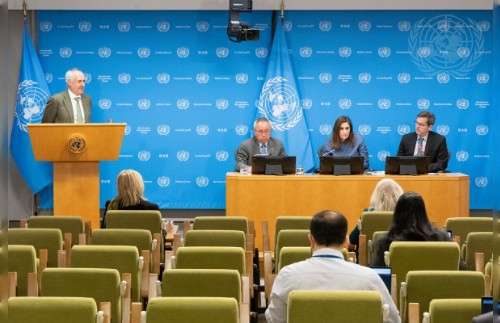
Press Briefing on Launch of Financing for Sustainable Development Report 2026

The Largest Hotel in Malaysia, with 7,351 Operational Rooms, Held Guiness World Record Since 2015
Subscribe Our You Tube Channel

Fighting Fake News
Fighting Lies