



By Lin Tao

In Brief
As outbreaks of COVID-19 cases across China overwhelm hospitals, the official daily death count has remained in the single digits. Chinese officials have repeatedly claimed that China is adopting one of “two main global standards for determining COVID deaths.”
Asia Fact Check Lab (AFCL) found that this claim is misleading. China uses a very narrow definition for COVID deaths compared to other countries, which use a more inclusive standard suggested by the World Health Organization. There are not “two main global standards,” according to the AFCL’s research.
In Depth
COVID cases surged in China after the government relaxed what had been particularly stringent pandemic restrictions in December 2022. Millions of its citizens have struggled to access medicine or proper medical care.
Reports indicate that a sharp rise in the number of COVID cases has overwhelmed hospitals and funeral homes. And yet, China’s health authority reported fewer than 20 deaths caused by COVID across the country in December. WHO officials said that official COVID statistics from China – particularly total deaths – underrepresent “the true impact of the disease.”
Despite the criticism, China maintains that its COVID data is accurate. On Jan. 4, the Chinese Center for Disease Control and Prevention reported zero COVID deaths.
AFCL found, however, that China’s standard of determining COVID deaths is much stricter than the one used by other countries. In China, only deaths directly caused by respiratory failure due to COVID are counted as deaths by the disease.
For example, a feature article in China Newsweek about a hospital in northern China recorded more than a dozen deaths from COVID-related infections in just three days. But because many of the patients were also suffering from chronic diseases such as COPD and coronary heart disease, their deaths wouldn’t be linked to the coronavirus.
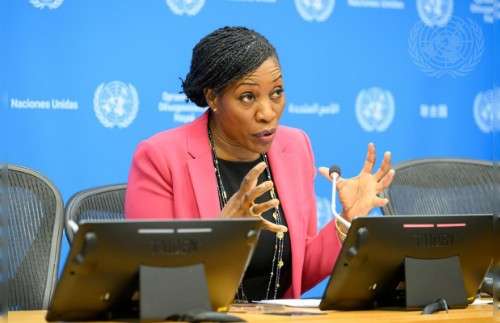
The criteria China uses was reaffirmed recently by top health officials. “There are currently two main global standards for determining COVID deaths,” said Jiao Yahui, director general of China’s National Health Commission, at a State Council Information Office briefing on Dec. 29. “The first only accepts cases where the victim tests positive for COVID after being infected by the disease. The disease must then trigger respiratory failure and directly cause the victim’s death. The second standard counts any death within a 28-day window after being infected with COVID as a death caused by the disease. China has consistently used the first standard to determine deaths since 2020.”
A document issued by the Chinese Embassy in France credits the country’s anti-COVID strategies for limiting deaths to only a few thousand. The article, which is entitled “China’s achievements in containing COVID cannot be discredited or distorted,” notes in comparison that 160,000 people had died in France and more than 1 million in the U.S. over the same period.
It then criticizes the “all-inclusive” standard of tallying COVID deaths adopted by other countries as unscientific. “Imagine a person dies in a car accident. It so happens he tested positive for COVID. Will he be ruled as dying from the car accident or from COVID?,” the document asks.
No other country surveyed by AFCL – including developed countries such as the U.S. and U.K. and developing countries such as India – is following the standard adopted by China. Hong Kong and Taiwan both use the WHO standard as well.
The countries that use the WHO standard already specify that deaths caused by trauma, accident or homicide are not to be counted as COVID cases even if the deceased later tests positive for the disease.
WHO Standard
Here is what the WHO suggested:
The latest edition of Clinical Management of COVID-19 Living Guidelines states: “A death due to COVID-19 is defined for surveillance purposes as a death resulting from a clinically compatible illness, in a probable or confirmed COVID-19 case, unless there is a clear alternative cause of death that cannot be related to COVID-19 disease (e.g. trauma).”
Although the WHO does not prescribe a specific number of days within which patients who tested positive for COVID should be ruled as dying from the disease, it does mention a 28-day window in the above mentioned guideline. All other countries surveyed by RFA have adopted a similar or longer window in practice.
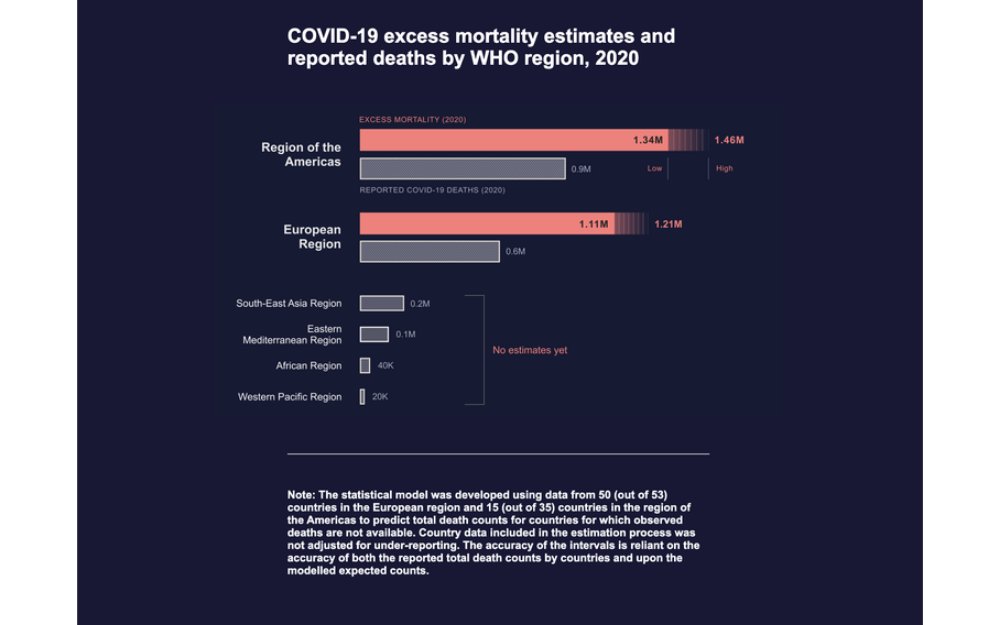
WHO has never suggested defining a COVID death as a “respiratory failure directly caused by COVID-19 infection.” The organization now suggests COVID death rates be calculated based on a measurement of “excess deaths” – that is, how many more people died during a pandemic year than normal. WHO argues that global excess deaths associated with the epidemic may far exceed current estimates.
How other countries count COVID deaths
U.S.: The criteria varies slightly by state, but most count any deaths within 30-60 days of a COVID infection, excluding obvious unrelated deaths from accidents, external injuries or violence. For example, Massachusetts says any spontaneous death occurring within thirty days of a positive COVID test can be attributed to the disease. Any case where COVID is written on a death certificate is counted, regardless of the patient’s previous diagnostic history.
U.K.: COVID deaths are counted as any case of a person dying within 28 days of testing positive for the disease.
India: Any inpatient or outpatient deaths occurring within 30 days of a positive COVID test are counted.
Hong Kong: Any deaths within 28 days of first testing positive are counted.
Taiwan: Any deaths within 60 days of a positive test – excluding accidents, suicides and homicides – are counted, and all related funeral expenses are eligible for government assistance payments.
In conclusion, AFCL found China’s official statement regarding the “two main global standards for determining COVID deaths” to be misleading. The WHO never suggested two standards, and most countries have followed WHO’s, not China’s, criteria to calculate the pandemic’s death toll.
The allegation by the Chinese Embassy in France that the West’s “all-inclusive” standard counts car accidents as deaths associated with COVID is also misleading. The standards adopted by most countries and regions explicitly exclude non-natural deaths such as accidents and violent deaths.
On Jan. 4, WHO Director-General Tedros Adhanom Ghebreyesus urged China to share “more rapid, regular, reliable data on hospitalizations and deaths.”
Asia Fact Check Lab (AFCL) is a new branch of RFA, established to counter disinformation in today’s complex media environment. Our journalists publish both daily and special reports that aim to sharpen and deepen our readers’ understanding of public issues.
Copyright © 1998-2020, RFA. Used with the permission of Radio Free Asia, 2025 M St. NW, Suite 300, Washington DC 20036. https://www.rfa.org.