

Headlines
  • On Monday at 14:00 GMT, the US military says it would start blockading Iranian ports, preventing ships from entering or leaving Iran from passing through the Strait of Hormuz.
  • In the southern town of Biyyada, Hezbollah claims that its men have attacked Israeli soldiers with "a swarm of attack drones."
  • US President Donald Trump's threat to block the Strait of Hormuz was deemed "ridiculous" by Iran's navy chief, Shahram Irani.
  • Any military ships approaching the Strait of Hormuz "will be considered a violation of the ceasefire and will be met with severe force," according to a statement released on Sunday by Iran's Islamic Revolutionary Guard Corps (IRGC).
  • The speaker of Iran's parliament Mohammad Baqer Ghalibaf ​ is leading the delegation that has arrived to Pakistan for talks with the United States.
  • Nawaf Salam, the prime minister of Lebanon, stated that he was working to ensure the withdrawal of Israeli forces and to put an end to the Israel-Hezbollah conflict.
  • Viktor Orban, the longtime prime minister of Hungary, has conceded defeat to Peter Magyar in the country's legislative election.

More Details

Ancient Alligator Species Identified in Thailand

It is closely related to the Chinese alligator, the only one in Asia.

8Subel Rai Bhandari for RFA/Bangkok
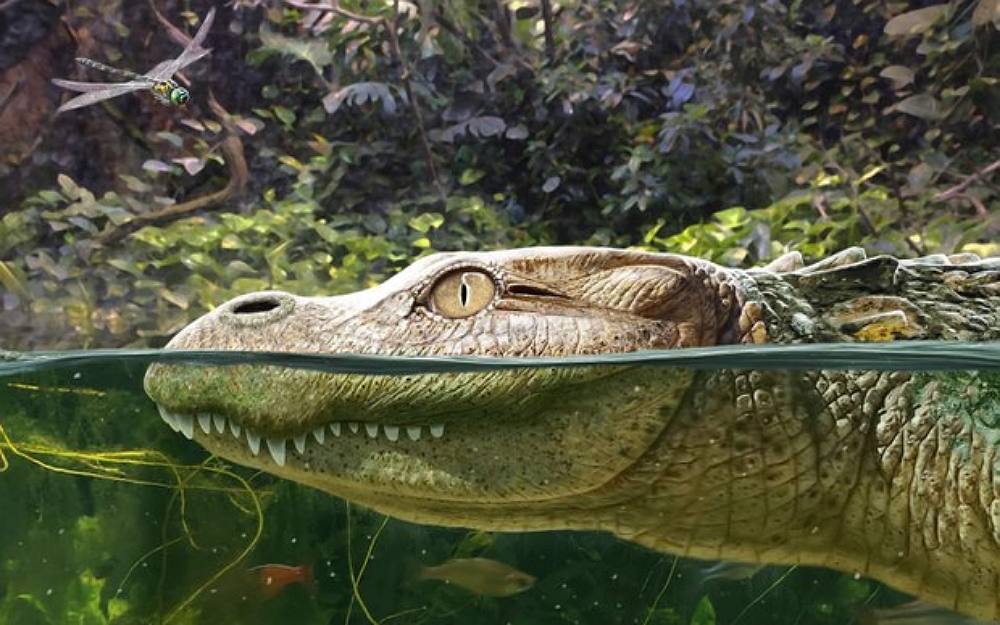
Life reconstruction of Alligator munensis. Márton Szabó, via Nature journal Via RFA

Scientists have discovered a previously unknown alligator species with a distinct skull structure that thrived in ancient Thailand about 230,000 years ago, offering additional insights into the evolutionary history of Asian alligators, according to a new study.

The creature in question shares a close evolutionary relationship with the Chinese alligator, said the research published on Thursday in Nature’s Scientific Reports journal. 

The identification of this recently unearthed species was made possible by meticulously examining an almost complete fossilized skull, estimated to be younger than 230,000 years old.

The prehistoric species was found in the Ban Si Liam area of the Non Sung district of Nakhon Ratchasima Province, which is about 300 kilometers (186 miles) northeast of Bangkok. The chosen name for this species, Alligator munensis, pays homage to the nearby Mun River. 

It displayed distinctive skull characteristics, such as a wide and short snout, a high skull structure, a reduced count of tooth sockets, and nostrils positioned far from the snout’s tip.

The alligator is a large, semi-aquatic reptile in the Crocodilia order. It is mostly found in freshwater habitats, unlike crocodiles, which are found in fresh and saltwater habitats. 

There are two living alligator species: the American Alligator (Alligator mississippiensis) and the Chinese Alligator (Alligator sinensis), also known as Yangtze alligators, found in a small area in northeastern China.

The researchers analyzed the remains of the fossil. They conducted a thorough comparison with 19 specimens belonging to four extinct alligator species and the living alligators to understand the evolutionary connections between the creature and other species, the researchers said in a statement.

GAccording to the study, the skull of Alligator munensis displays similar features to the Chinese alligator, including a small opening in the roof of the mouth, a ridge on the skull’s top and an elevated ridge behind the nostrils.
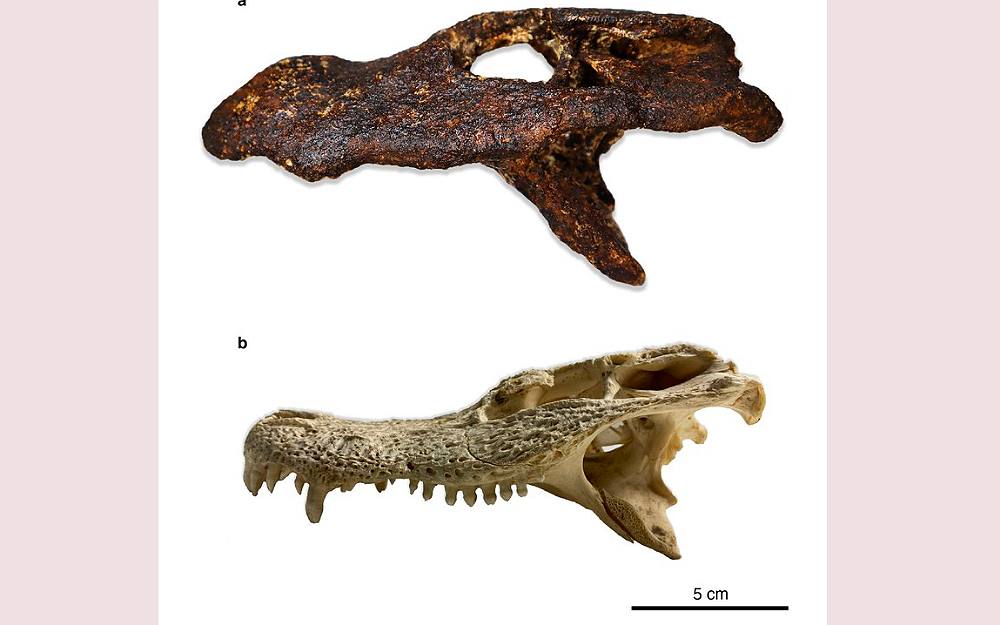
Comparison between the skulls of (a) Alligator munensis and (b) Alligator sinensis in lateral view. Credit: Gustavo Darlim and Márton Rabi, via Nature journal Via RFA

Scientists believe that these two species share a close relationship and may have originated from a common ancestor inhabiting the lowlands of the Yangtze-Xi and Mekong-Chao Phraya river systems.

The rise in elevation of the southeastern Tibetan Plateau around 23 to 5 million years ago caused a separation between their shared ancestors, leading to the development of distinct species, the researchers speculate.

The researchers also noted the presence of large tooth sockets at the back of the ancient alligator’s mouth, indicating the potential for possessing robust teeth capable of crushing shells. 

They said that its diet likely included hard-shelled prey, such as snails, alongside other animals.

Edited by Mike Firn.

Copyright © 1998-2020, RFA. Used with the permission of Radio Free Asia, 2025 M St. NW, Suite 300, Washington DC 20036. https://www.rfa.org.

Related Article

US to Set Up Philippines Fuel…

Washington is planning a fuel depot in the southern Philippines that could support humanitarian and ...
April 11, 2026

Japan’s Combat Role in Philippines War…

Japan sending combat troops to participate in upcoming exercises in the Philippines is a signal of a ...
April 9, 2026

PNG-Australia Defense Treaty Creates Jobs, Risks…

Six months after Papua New Guinea and Australia signed a bilateral defense treaty, public opinion in ...
April 8, 2026

China-US Competition for Rare Earths Sparks…

A U.S. plan to potentially mine an area of Pacific seabed roughly the size of Nevada near two U.S. t ...
April 2, 2026

North Korean Hackers Offer $70,000 Per…

Cybersecurity engineer Toufik Airane was approached by a North Korean hacker who offered him a small ...
March 27, 2026

Vietnam Protests China’s Development of Disputed…

Vietnam has condemned China’s land reclamation activities at Antelope reef in the disputed Paracel ...
March 24, 2026

Other Article

Bizzare News

World’s Smallest Hotel

Recognized by Guiness World Records on April 18, 2023, Trafo-Häuschen is the current title holder o ...
April 13, 2026
Pet Corner

Pumi Dog Breed

The small sized Pumi dog breed is a harding dog that originated in Hungary.This type of dog has upri ...
Prevent Cyber Crime

Computer Incident Handling

Businesses and organizations can create an effective strategy to guarantee cybersecurity by using in ...
News & Views

US to Set Up Philippines Fuel…

Washington is planning a fuel depot in the southern Philippines that could support humanitarian and ...
April 11, 2026
Pick of the Day

Press Briefing on Humanitarian Situation in…

Edem Wosornu, Director of the Crisis Response Division in the Office for the Coordination of Humanit ...
Bizzare News

Texas Woman Sentenced to Six Years…

After pleading a guilty plea to mailing synthetic cannabinoids and other drugs into facilities run b ...
April 10, 2026

Top