




Bangladeshi authorities have allegedly killed 466 people in 2018 under the guise of an anti-drugs campaign in what appears to be a wave of extrajudicial executions.
There are allegations of enforced disappearance and fabricating evidence by the law enforcement agencies in these suspected extrajudicial executions, a new Amnesty International report reveals.
The report, Killed in “Crossfire”: Allegations of Extrajudicial Executions in Bangladesh in the Guise of a War on Drugs, reveals how the Bangladeshi authorities have failed to investigate deaths of people allegedly killed in “gunfights.” The 466 suspected extrajudicial executions in 2018 alone marked a threefold increase on 2017 and the highest in a single year in decades.
“The ‘war on drugs’ has led to the death of at least one person per day. Wherever there has been involvement of the Rapid Action Battalion it appears they have acted outside of the law, the victims were not arrested, let alone put on trial. Some were forcibly disappeared from their homes and their relatives only saw them next as bullet-riddled corpses in the morgue,” said Dinushika Dissanayake, Deputy South Asia Director at Amnesty International.
“The Bangladeshi authorities must put an end to these killings immediately. The ‘anti-drugs’ operations have spread terror in some of the country’s poorest neighbourhoods, where people fear the slightest suspicion of being involved in drug abuse may lead to their loved ones being subjected to another alleged extrajudicial execution.”
Instead of launching proper investigations into these killings, the authorities allegedly sought to fabricate evidence to support their “gunfights” or “crossfire” claims.
In interviews with Amnesty International, supposed “witnesses” revealed that they had not seen the killings but were asked by the police to provide fabricated statements supporting the police version of the deaths as having taken place in alleged “gunfights” or “cross fire”.
In all the cases investigated by Amnesty, the victims were first subjected to apparent enforced disappearances, lasting anywhere from one day to a month and a half, before their dead bodies were eventually discovered. In one case, relatives of one of the victims claimed to have bribed police in exchange for the victim’s release, but to no avail.
Claims of “crossfire” and fabricated evidence
Bangladeshi officials have routinely claimed that the victims of apparent extrajudicial executions were caught up in a fire fight, where the suspects fired the first shot at the members of law enforcement agencies, forcing them to resort to lethal force.
Amnesty International spoke to supposed “witnesses” who said that they were involuntarily taken to the crime scene only after the killings had taken place.
“We did not see anything,” one such “witness” told Amnesty International. “They called and took me with them to the location around 5:30am and asked me to witness what they were taking from there. I only saw a motorbike and nothing else.”
At least five witnesses interviewed by Amnesty International have said that they were involuntarily taken to the spot after the incident. They said they could not refuse police requests to act as witnesses fearing harsh consequences. Security forces have taken signatures, names, phone numbers and personal details of the witnesses.
Demands of bribes
“Suleman” (not his real name) was a 35-year-old who lived with his eight-year-old daughter in a thatched hut. Struggling to make ends meet, according to his family, Sulemanwould rely on his siblings for food and other expenses.
The family members of Suleman told Amnesty that before he was killed in an alleged “gunfight”, Suleman called a relative that the police demanded 20,000 takas (USD 237) for his release and requested to arrange the money. One of Suleman’s family members confirmed to Amnesty that he paid the sums to the police, however, the police demanded an additional 50,000 takas (USD 593) – “or else they will kill me,” Suleman told the relative.
Desperate to locate Suleman, the relatives went to a police station where they were told he had been transferred to prison. Three or four days after the phone call, they were told that Suleman had died in a “gunfight.”
Enforced disappearances
All the victims of the supposed “gunfights” appear to have been forcibly disappeared by the police and the Rapid Action Battalion (RAB) prior to their deaths. When relatives sought information of their whereabouts, the authorities either denied they were in their custody or refused to say where they are.
“Rahim” (not his real name) was forcibly disappeared from the home of his in-laws. Eight days later, Rahim’s corpse was discovered. RAB claimed he died during a “gunfight”.
Enforced disappearances
All the victims of the supposed “gunfights” appear to have been forcibly disappeared by the police and the Rapid Action Battalion (RAB) prior to their deaths. When relatives sought information of their whereabouts, the authorities either denied they were in their custody or refused to say where they are.
“Rahim” (not his real name) was forcibly disappeared from the home of his in-laws. Eight days later, Rahim’s corpse was discovered. RAB claimed he died during a “gunfight”.
“Bablu Mia” (not his real name) was forcibly disappeared from the highway by two RAB officers dressed in plainclothes, according to his brother, who filed a police complaint detailing the disappearance. A month and a half later, RAB said that Bablu Mia was killed in a “gunfight”.
Investigations
Amnesty International is calling on the Bangladesh authorities to carry out a prompt, impartial, independent and effective investigation into the wave of apparent extrajudicial executions and other human rights violations committed by the police and RAB as part of its ongoing anti-drugs operations.
These killings have taken place in the wider context of a blanket prohibition of drugs under which the government has deliberately punished and violently attacked people, particularly those from the most marginalized communities. The Bangladesh government must carry out prompt and effective investigations and hold the perpetrators accountable. It must urgently shift its drug control strategy to ensure it protects people, not harms them,” said Dinushika Dissanayake.
Background
Amnesty International documented a total of seven cases of alleged extrajudicial executions by visiting the locations of the incidents as well as interviewing 40 people including families of the victims, “witnesses” whose statements were coerced by law enforcement agencies, people in the neighbourhood where the incidents happened, and human rights activists in Bangladesh. The interviews were carried out in November 2018, followed by desk research and triangulation of information thereafter.
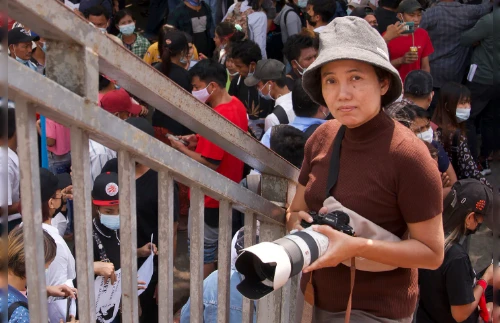
Award-Winning Burmese Journalist Shin Daewe Released from Prison
UN Security Council Meets on Situation in Sudan and South Sudan

Mexican’s Zoo’s Star attraction Yuji, Abandoned Newborn Monkey

Sinhala Hound
UN Permanent Representative of Israel Briefs Press

Web Cache Poisoning
Michigan Delivery Driver Shot Missing Dog, Found Alive After Bullet Bounced Off Skull
Berger Picard Dog Breed
If you want to contact us
For latest updates
From our Archive

.